top of page

The Human Asset: Celebrating the Immersive Leap

Writer: Yourstorydoneright Productions
Yourstorydoneright Productions
11 minutes ago
4 min read

By Peggy Philips, PhD., IYI

Founder and Principal Author of the Neuro Emergent Meta-Framework©

Have you ever logged off a long day of virtual meetings or stepped away from an immersive digital space feeling completely hollowed out? You’re physically sitting in your room, but your mind is cloudy, your shoulders are tight, and you feel strangely disconnected from the actual world around you.


	It’s easy to brush this off as simple screen fatigue. But when we look at how we move between worlds, we are interacting with a profound human truth: technology is simply an external architecture we use to project our consciousness. It is our new "ink". To navigate this landscape as a performer—whether you are an actor fully inhabiting a character on a film set, or a user diving into a high-fidelity video game—demands that we explore the deep psychological reality of stepping into a role.


Celebrating the Immersive Leap


	There is something deeply beautiful about our capacity to immerse ourselves in another reality. For an actor, stepping into a role requires entering a willing, temporary "psychosis"—a state where you deliberately suspend your baseline parameters to discover someone else's emotional truth.


	When it works, it is brilliant. For someone living with a physical disability, immersive spaces and adaptive gaming avatars offer a liberating, healthy version of this experience. It creates an architecture where they can experience physical or vocal abilities they might not have access to in their daily, offline lives. These virtual environments are not mathematical falsehoods; because they track our movements and match our breath, our brains authentically register them with incredible presence. We should celebrate this magic. It is a stunning extension of human styling and storytelling choices.


The Corporate Friction: Guarding the Brand, Missing the Asset


	But every powerful performance has a boundary. The friction arises when the industries built around talent—our management networks and public relations teams—lose sight of what makes the magic possible. The true duty of a PR firm or a manager should be to safeguard the core asset: the living, breathing human being. It is your raw, organic human experiences—your real pain, your true joy, your unique internal cadence—that people resonate with and that brings actual value to a commercial screen.


	Instead, a subtle shift has occurred across corporate pipelines. Management frequently prioritizes guarding the immediate revenue over protecting the human anchor. The industry has become obsessed with distributing the hollow avatars of comic books and superheroes. On screen, these corporate figures wage epic battles between good and evil, but behind the scenes, an insular echo chamber forms.


	When a management flock detaches from everyday human reality, they tend to push hyper-curated, continuous public narratives that harm the best of humanity. They quietly drag the cultural plumbline downward. As an actor, when your representation pressures you to constantly live behind that artificial mask to preserve a brand, your internal alarm systems spike. Your prefrontal cortex dims under the load of continuous performance, leaving you structurally exhausted and trapped in a character you are forbidden to unlatch.


The Real Hollywood Metaphor: Losing Yourself to the Flock


Here is the deeper warning we cannot ignore: this corporate mismatch is a mirror for exactly how we betray ourselves in the digital matrix.


	Just like Hollywood PR and management teams force an actor to suppress their authentic self to preserve a profitable brand, we routinely do the exact same thing to our own biology. The moment we step into a digital space, we become our own over-controlling PR manager. To fit in, to survive the echo chamber, or simply to get along with the collective "flock," we micro-manage our digital image. We prioritize our outward presentation over our inward reality.


	We alter our true beliefs, filter our unique neurotypes, and wear an exhausting, continuous "survival mask" just to keep the peace and remain liked. In doing so, we commit the ultimate corporate betrayal against ourselves: we treat our own living, breathing humanity as a secondary thought, trading away our organic experiences just to protect a hollow digital avatar. When you mimic that toxic corporate management loop, you strip away your own substance. You leave your nervous system running on emergency backup power, trapped in an identity that was built for public consumption rather than human survival.


The Turning Point: Knowing When It Goes Too Far?


	How do you know when the performance has gone too far? It is when the boundaries blur. It is that precise moment you realize you no longer feel present outside of the role or the avatar. When real life begins to feel numb, and you can only find focus, power, or comfort while wearing the mask, the performance is no longer serving you—it is absorbing you.


	The good news is that recognizing this shift is your greatest strength. It does not mean your internal system is broken. The moment you notice that disconnect, it is simply your biological signal to dial back and restore your balance. You cannot reason your way out of a physiological state of burnout that you performed your way into.

To find your baseline again, look to the animal mirror. Watch a herd of wild horses or a flock of birds moving through nature. They participate beautifully in the rules and safety of the collective, yet they remain undeniably, completely themselves. They never wear an artificial survival mask or force-quit their own nature just to fit in. They survive because they stay grounded in the physical reality of their biology.


	It seems a reasonable conclusion to hold onto that exact same caution. Celebrate the role, master the avatar, and enjoy the liberating reach of the digital matrix—but refuse to become your own worst manager. Protect the human asset. Step off the digital or theatrical stage and come back to the shore of real life. Put your feet flat on the floor, unclamp your jaw, and let your body drop the wardrobe of the character. True adventure demands that you remain fully conscious, making intentional choices of connection in both worlds, while always remaining the unshakeable director and executive producer of your own life story.


Works Cited


Bailenson, J. N. (2021). Nonverbal overload: A theoretical argument for the causes of Zoom fatigue. Technology, Mind, and Behavior, 2(1), 1–6. 


The concepts above draw from academic research spanning avatar immersion, somatic self-regulation, and performance theory.  Full citations and detailed source materials in the referenced works by Cummings & Bailenson (2016), Ducheneaut et al. (2009), Philips (2026), Pimentel et al. (2021), and Yeadon (2018).
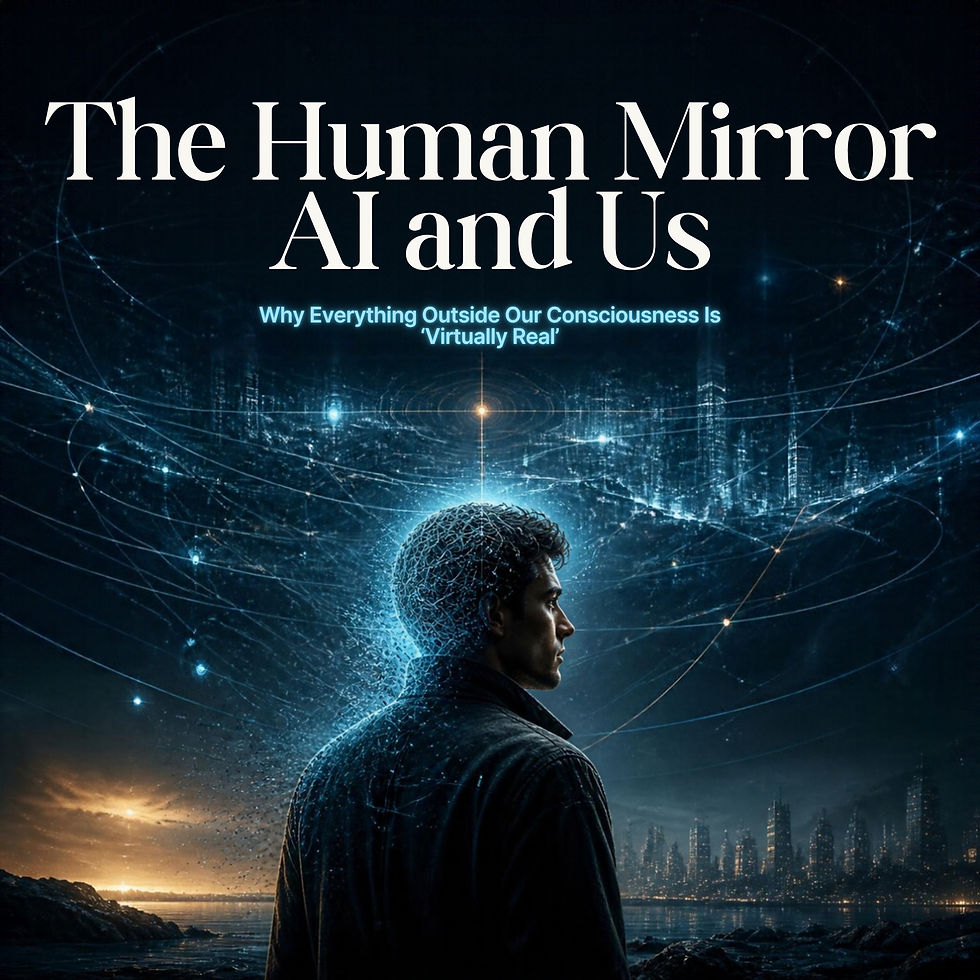

Have you ever logged off a long day of virtual meetings or stepped away from an immersive digital space feeling completely hollowed out? You’re physically sitting in your room, but your mind is cloudy, your shoulders are tight, and you feel strangely disconnected from the actual world around you.


It’s easy to brush this off as simple screen fatigue. But when we look at how we move between worlds, we are interacting with a profound human truth: technology is simply an external architecture we use to project our consciousness. It is our new "ink". To navigate this landscape as a performer—whether you are an actor fully inhabiting a character on a film set, or a user diving into a high-fidelity video game—demands that we explore the deep psychological reality of stepping into a role.


Celebrating the Immersive Leap


There is something deeply beautiful about our capacity to immerse ourselves in another reality. For an actor, stepping into a role requires entering a willing, temporary "psychosis"—a state where you deliberately suspend your baseline parameters to discover someone else's emotional truth.


When it works, it is brilliant. For someone living with a physical disability, immersive spaces and adaptive gaming avatars offer a liberating, healthy version of this experience. It creates an architecture where they can experience physical or vocal abilities they might not have access to in their daily, offline lives. These virtual environments are not mathematical falsehoods; because they track our movements and match our breath, our brains authentically register them with incredible presence. We should celebrate this magic. It is a stunning extension of human styling and storytelling choices.


The Corporate Friction: Guarding the Brand, Missing the Asset


But every powerful performance has a boundary. The friction arises when the industries built around talent—our management networks and public relations teams—lose sight of what makes the magic possible. The true duty of a PR firm or a manager should be to safeguard the core asset: the living, breathing human being. It is your raw, organic human experiences—your real pain, your true joy, your unique internal cadence—that people resonate with and that brings actual value to a commercial screen.


Instead, a subtle shift has occurred across corporate pipelines. Management frequently prioritizes guarding the immediate revenue over protecting the human anchor. The industry has become obsessed with distributing the hollow avatars of comic books and superheroes. On screen, these corporate figures wage epic battles between good and evil, but behind the scenes, an insular echo chamber forms.


When a management flock detaches from everyday human reality, they tend to push hyper-curated, continuous public narratives that harm the best of humanity. They quietly drag the cultural plumbline downward. As an actor, when your representation pressures you to constantly live behind that artificial mask to preserve a brand, your internal alarm systems spike. Your prefrontal cortex dims under the load of continuous performance, leaving you structurally exhausted and trapped in a character you are forbidden to unlatch.


The Real Hollywood Metaphor: Losing Yourself to the Flock


Here is the deeper warning we cannot ignore: this corporate mismatch is a mirror for exactly how we betray ourselves in the digital matrix.


Just like Hollywood PR and management teams force an actor to suppress their authentic self to preserve a profitable brand, we routinely do the exact same thing to our own biology. The moment we step into a digital space, we become our own over-controlling PR manager. To fit in, to survive the echo chamber, or simply to get along with the collective "flock," we micro-manage our digital image. We prioritize our outward presentation over our inward reality.


We alter our true beliefs, filter our unique neurotypes, and wear an exhausting, continuous "survival mask" just to keep the peace and remain liked. In doing so, we commit the ultimate corporate betrayal against ourselves: we treat our own living, breathing humanity as a secondary thought, trading away our organic experiences just to protect a hollow digital avatar. When you mimic that toxic corporate management loop, you strip away your own substance. You leave your nervous system running on emergency backup power, trapped in an identity that was built for public consumption rather than human survival.


The Turning Point: Knowing When It Goes Too Far?


How do you know when the performance has gone too far? It is when the boundaries blur. It is that precise moment you realize you no longer feel present outside of the role or the avatar. When real life begins to feel numb, and you can only find focus, power, or comfort while wearing the mask, the performance is no longer serving you—it is absorbing you.


The good news is that recognizing this shift is your greatest strength. It does not mean your internal system is broken. The moment you notice that disconnect, it is simply your biological signal to dial back and restore your balance. You cannot reason your way out of a physiological state of burnout that you performed your way into.

To find your baseline again, look to the animal mirror. Watch a herd of wild horses or a flock of birds moving through nature. They participate beautifully in the rules and safety of the collective, yet they remain undeniably, completely themselves. They never wear an artificial survival mask or force-quit their own nature just to fit in. They survive because they stay grounded in the physical reality of their biology.


It seems a reasonable conclusion to hold onto that exact same caution. Celebrate the role, master the avatar, and enjoy the liberating reach of the digital matrix—but refuse to become your own worst manager. Protect the human asset. Step off the digital or theatrical stage and come back to the shore of real life. Put your feet flat on the floor, unclamp your jaw, and let your body drop the wardrobe of the character. True adventure demands that you remain fully conscious, making intentional choices of connection in both worlds, while always remaining the unshakeable director and executive producer of your own life story.


Works Cited


Bailenson, J. N. (2021). Nonverbal overload: A theoretical argument for the causes of Zoom fatigue. Technology, Mind, and Behavior, 2(1), 1–6.


The concepts above draw from academic research spanning avatar immersion, somatic self-regulation, and performance theory. Full citations and detailed source materials in the referenced works by Cummings & Bailenson (2016), Ducheneaut et al. (2009), Philips (2026), Pimentel et al. (2021), and Yeadon (2018).


Comments

Rated 0 out of 5 stars.
No ratings yet

Add a rating
bottom of page